
Spine Pain Treatment
Spine pain affects more than your back or neck. It can interfere with sleep, sitting, driving, walking, exercise, work, and the activities you enjoy. When nerves become irritated, symptoms may also travel into the shoulders, arms, hips, glutes, or legs.
We compare your symptoms, physical examination, movement, strength, and imaging to identify the most likely source of your pain, then we create a personalized plan focused on reducing pain, restoring function, and exploring appropriate regenerative treatment options.
Request an Appointment
Learn how regenerative orthopedics may be the answer to your spine pain without surgery or medications.
Regenerative Medicine for Spine Pain
Regenerative medicine may offer patients another option when rest, medication, physical therapy, or previous injections have not provided enough relief. Based on your symptoms and diagnosis, regenerative care can address irritated spinal joints, ligaments, muscles, or other supporting tissues. These treatments work as part of a broader plan that also addresses core strength, stability, movement, and activity tolerance.
Personalized Care
No two cases of spine pain are the same. A disc abnormality that causes severe symptoms in one patient might cause few symptoms in another. Your treatment plan must reflect how your spine functions, not only how it appears on an imaging report.
We review where your pain begins, where it travels, which movements make it worse, and how it affects your daily life. We also assess strength, sensation, reflexes, posture, mobility, core stability, and movement patterns.
Advanced Technology
Advanced technology supports treatment when it serves a specific clinical purpose. Image guidance helps place injections into the intended treatment area when regenerative treatment is appropriate. Shockwave Therapy addresses selected muscular and connective tissue pain around the spine. Magnetic Field Therapy provides non-invasive support for recovery by decreasing inflammation and enhancing bone and soft tissue healing. Accufit activates abdominal, gluteal, and supporting muscles that help stabilize the spine. These technologies complement a personalized care plan. They do not replace an accurate diagnosis, appropriate rehabilitation, or surgical evaluation when significant nerve compression is present.
Causes of Spine Pain
Your spine relies on discs, facet joints, ligaments, muscles, and nerves working together. Pain often develops from several factors, including tissue irritation, nerve compression, restricted movement, muscle weakness, and reduced tolerance for physical activity.
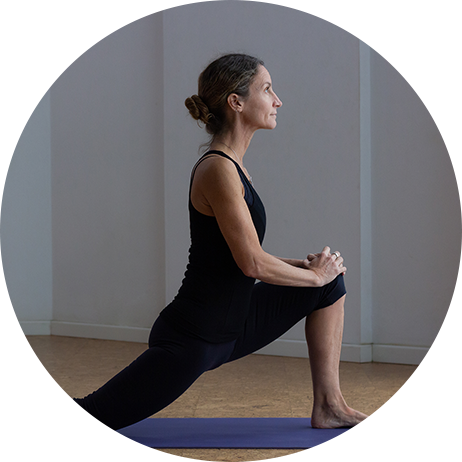
Getting a Second Opinion for Spine Pain
A second opinion can provide added clarity before making a major decision about treatment for your spine.
Consider a second opinion when you have been advised to undergo spinal fusion, decompression surgery, disc replacement, repeated injections, or long-term medication management. It is also appropriate when your symptoms continue despite treatment or when your diagnosis does not fully explain what you feel.
Spine Conditions & Treatments
Spine pain can limit movement and impact daily life. Our focus is spine-specific, non-surgical care for the most common conditions seen in orthopedic and sports medicine settings.
Herniated Discs
Treatment might include activity modification, movement retraining, progressive strengthening, and therapies that address surrounding muscle tension and inflammation.
Degenerative Disc Disease
Treatment focuses on improving spinal support, managing mechanical stress, restoring movement, and addressing other structures contributing to pain. Imaging findings must be considered alongside your symptoms and physical examination
Sciatica
Effective treatment depends on finding the cause of the nerve irritation. The care plan might address spinal movement, core and hip strength, activity tolerance, muscle tension, and the underlying condition producing pressure or inflammation around the nerve.
Spinal Stenosis
Non-surgical care focuses on mobility, strength, function, and symptom management. Regenerative or supportive technologies do not physically widen the spinal canal.
Facet Joint Syndrome
Treatment focuses on reducing stress across the affected joint, improving surrounding muscle support, restoring movement, and addressing inflammation.
Chronic Back and Neck Pain
A successful plan must address more than pain intensity. We evaluate how your condition affects movement, endurance, work, exercise, and daily activities. Progress is measured through changes in function, strength, mobility, activity tolerance, and symptom patterns.
Evaluation, Diagnosis and Treatment Plans
Diagnostics & Evaluation
Neurological Examination
We assess strength, sensation, reflexes, balance, and other signs of nerve or spinal cord involvement.
Movement and Mechanics Assessment
We evaluate bending, rotation, walking, posture, hip movement, core control, and how your spine responds to everyday movements.
Imaging Review
We review available X-rays, MRI scans, CT scans, and previous reports. Additional imaging or diagnostic testing is recommended only when it would help confirm the diagnosis or change the treatment plan.
X-rays provide information about alignment, arthritis, bone changes, and instability. MRI scans provide greater detail about discs, nerves, muscles, ligaments, and the spinal cord.
Identifying the Pain Generator
An abnormal MRI does not automatically identify the source of pain. We compare the imaging with your symptoms and examination to determine which findings are clinically meaningful.
Treatments & Personalized Care Plans
Regenerative Treatment
Advanced A2M/PRP might be considered when a specific joint or supporting tissue is identified as an appropriate treatment target.
Strength and Stability
Core, hip, gluteal, and spinal support muscles help control movement and distribute physical stress. Your plan might include targeted strengthening, neuromuscular activation, and progressive movement.
Activity and Movement Planning
We help you understand which activities to continue, which movements to modify, and how to progress safely toward work, exercise, golf, cycling, or other goals. Your plan evolves based on changes in pain, strength, mobility, endurance, and daily function.
Advanced Technologies for Spine Pain Treatment
Technology should serve the diagnosis, so we select each treatment based on the structure involved, the type of symptoms you experience, and how your body responds over time.
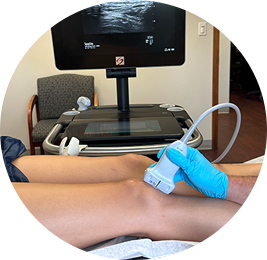
Advanced A2M/PRP
Concentrated biologic treatments support healing in spinal joints and surrounding tissues, reduce inflammatory stress, and help preserve mobility and function.
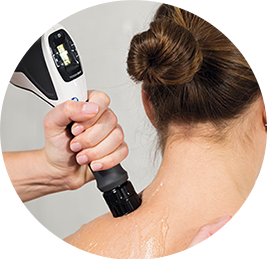
Shockwave Therapy
Shockwave Therapy delivers targeted acoustic energy to selected muscles, fascia, tendons, and connective tissues around the spine.
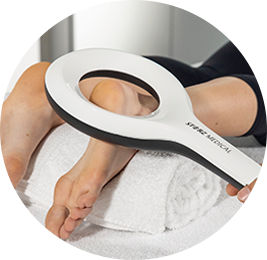
Magnetic Field Therapy
This non-invasive approach supports the control of inflammation and cellular recovery.
Accufit
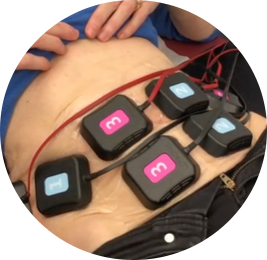
Accufit uses electrical muscle stimulation to produce controlled contractions in selected muscle groups. Treatment often focuses on the abdominal, gluteal, and other supporting muscles that contribute to core stability and movement control.
PelviPower Therapy
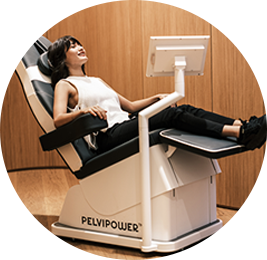
Improving core and pelvic floor strength can reduce strain on the spine. PelviPower therapy is noninvasive magnetic stimulation that target pelvic floor and deep core muscles.
Spine Pain FAQs
What are the most common causes of spine pain?
Common causes include muscle and ligament injuries, herniated discs, degenerative disc changes, facet joint arthritis, spinal stenosis, nerve irritation, poor movement patterns, and reduced core strength. More than one condition often contributes to symptoms.
How do you determine whether pain comes from a disc, nerve, joint, or muscle?
Diagnosis begins with the pattern of your symptoms. We then evaluate movement, strength, reflexes, sensation, and areas of tenderness. Imaging provides additional information, but it must match the findings from your history and examination.
Does an abnormal MRI mean I need treatment or surgery?
No. Many people have disc degeneration, bulging discs, or arthritis on imaging without significant pain. Treatment decisions should reflect your symptoms, neurological health, examination, and functional limitations rather than an imaging report alone.
Does a herniated disc always require surgery?
No. Many herniated discs improve with time and non-surgical care. Surgery becomes more important when symptoms involve progressive weakness, significant nerve compression, spinal cord involvement, or pain that remains disabling despite appropriate treatment.
Is sciatica the same as lower back pain?
No. Sciatica refers to nerve symptoms that travel from the lower back or buttock into the leg. The underlying cause might be a herniated disc, spinal stenosis, arthritis, or another source of nerve irritation.
What non-surgical treatments are available for spine pain?
Options depend on the diagnosis. Care might include activity modification, targeted rehabilitation, core strengthening, movement retraining, Shockwave Therapy, Magnetic Field Therapy, AccuFit, and selected image-guided regenerative treatments.
Is Advanced A2M/PRP appropriate for every spine condition?
No. Advanced A2M/PRP is considered only when the examination and imaging identify a suitable treatment target. It does not replace surgical treatment for severe spinal cord compression, progressive neurological loss, or structural instability.
Will regenerative medicine repair a herniated disc or reverse spinal stenosis?
Regenerative treatment does not remove herniated disc material or enlarge a narrowed spinal canal. Its potential role involves selected pain-generating joints and supporting tissues. The diagnosis determines whether regenerative treatment belongs in your plan.
Advanced Imaging: Vertebral Motion Analysis (VMA®)
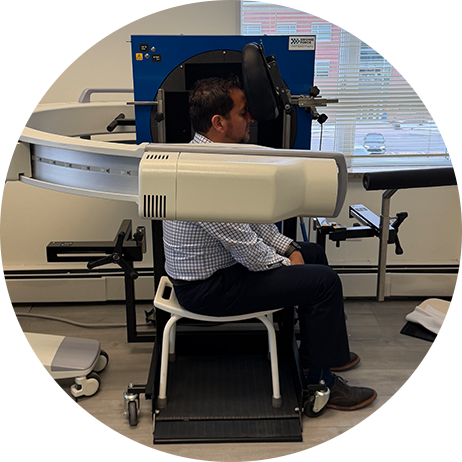
We partner with TruePath Imaging to provide our patients a modern diagnostic image of the spine, called Vertebral Motion Analysis, or VMA®.
VMA is an FDA-cleared motion-based spine diagnostic that shows how the spine behaves in real time. Instead of taking still pictures like standard X-rays or MRIs, VMA captures continuous imaging as the patient gently bends forward, backward, and side to side.
Using a surgical-grade C-arm and proprietary software, VMA measures the movement of each vertebra with sub-millimeter accuracy. This reveals spinal ligament injuries and mechanical instability that are invisible on imaging at rest.
VMA replaces guesswork with objective, quantifiable data that provides clinical insights into the patient’s spine’s overall health.
Request an Appointment
If you’re experiencing spine pain or a joint-related injury, our care team is here to help. The first step is scheduling a consultation appointment with our board-certified orthopedics physician to review your symptoms and discuss a diagnosis and personalized treatment plan.
Complete the form below to share your symptom(s) and additional health information. Our team will review the information and call you to discuss setting up your consultation in our clinic.