
Regenerative Orthopedics, Pelvic Floor & Pilates
Two Experts. Three Questions.
SmartLife Medicine Founder, Matthew Vogt, MD, and Casa Pilates Owner, Sheila Diaz, discuss the importance of staying active during and post-regenerative orthopedics care and pelvic floor health.


Question 1
When receiving and recovering from regenerative orthopedic treatments, it’s critical that patients stay active and healthy to optimize their outcomes. How can Pilates factor into those stages?
Dr. Vogt:
Pilates can be an excellent complement to regenerative orthopedic treatment because it strengthens the core and stabilizing muscles that help distribute load more effectively across the joints, while improving mobility, alignment, and neuromuscular control. During recovery, I’d recommend appropriately modified Pilates as a way to progressively restore movement and strength without unnecessarily overloading the treated area; later, it can help patients maintain the strength and movement patterns that support healthy joint function and return to full activity.
Sheila Diaz, NCPT:
From a Pilates instructor’s perspective, Pilates can help people reconnect with their bodies during recovery. After an orthopedic treatment, it’s common to feel hesitant about movement, so Pilates provides a way to work on strength, mobility, balance, and control while respecting their stage of recovery.
Because Pilates is highly adaptable, we can focus on moving better rather than simply doing more. As clients progress, we can gradually increase resistance, range of motion, and stability. My goal is to help clients feel stronger and more confident in their movement while following their healthcare provider’s recommendations.
Question 2
New moms need additional support in their pelvic floor after childbirth. Why is this, and what are their options for strengthening it?
Sheila Diaz, NCPT:
Postpartum recovery is about supporting a new mom’s body rather than rushing to “get your body back.” Once cleared by their healthcare provider, Pilates can help gradually reconnect the core, breathing, posture, and pelvic floor. We start with simple, controlled movements and build strength and confidence over time, while helping clients understand how their breath and core work together. For women experiencing pelvic floor weakness or symptoms, working with a pelvic floor physical therapist or other qualified healthcare professional is important. Treatments such as PelviPower Therapy can also be a great noninvasive complement to Pilates and pelvic floor rehabilitation.
Dr. Vogt:
I believe we really need to pay more attention to and offer pelvic floor rehab after childbirth. Pregnancy can stretch or weaken the pelvic floor muscles and connective tissue, which can affect strength, coordination, and the ability to properly support the bladder, bowel, and pelvic organs. Technologies such as PelviPower Therapy provide noninvasive electromagnetic stimulation to activate and strengthen the pelvic floor muscles. It can expedite recovery from childbirth and reduce future symptoms of urinary incontinence.
Question 3
Approximately 13 million Americans are incontinent, 85 percent of whom are women.* What options are there for adults seeking to reduce and improve their symptoms?
Dr. Vogt:
Strengthening the pelvic floor is a must and shouldn’t be ignored. Also, stress incontinence is not simply an issue of aging. I have treated patients ranging from a 90-year-old with hip pain to an 18-year-old college athlete and a 31-year-old woman who has never been pregnant, all experiencing stress incontinence for different reasons. Pelvic floor strengthening is an important component of treatment, and functional magnetic stimulation, such as PelviPower Therapy, can activate and strengthen the pelvic floor muscles to help improve urinary symptoms. PelviPower can be used as a stand-alone therapy or in conjunction with targeted exercise or manual therapy.
Sheila Diaz, NCPT:
From what I see as a Pilates instructor, pelvic floor symptoms can affect much more than someone’s physical comfort. They can also change the way they approach exercise and everyday activities. Some people start avoiding certain movements because they’re worried about leaking, which can make them feel less confident in their bodies.
Pilates can be one piece of the solution because we’re constantly working on breathing, core control, posture, coordination, and how the body manages pressure during movement. But I think the most important thing is that clients understand they don’t have to simply “live with it.” Pelvic floor concerns are worth talking about, and when needed, I encourage clients to work with a pelvic floor specialist. As an instructor, my role is to support that process through appropriate movement and exercise. When clients feel stronger, more aware of their bodies, and more confident moving, that can make a meaningful difference in how they approach exercise and daily life.
Explore Your Options
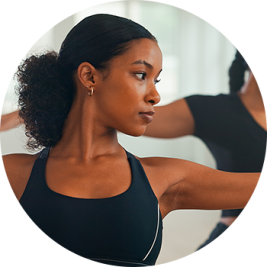
Regenerative Orthopedics
SmartLife Medicine believes in offering treatments that are effective, minimally invasive, and tailored to your specific needs. Regenerative medicine works with your body to heal itself without invasive surgery or long-term medications that simply mask symptoms.
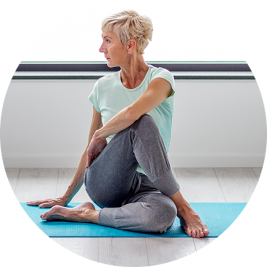
Casa Pilates
Casa Pilates is bringing an alternative way of doing Pilates to Naperville, offering 50 minute semi personalized sessions. Our sessions combine the best of Pilates equipment. Membership options are available to meet your schedule and needs.
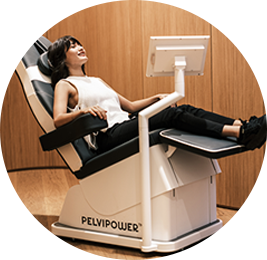
PelviPower Therapy
PelviPower Therapy is a non-invasive electromagnetic stimulation that targets the pelvic floor and core muscles. Sessions improve stability, posture, incontinence, postpartum recovery, sexual health and more.